A humidity tester measures moisture in the air so you can identify conditions that may promote mold, corrosion, static electricity, material damage, or discomfort. It is useful in homes, offices, greenhouses, laboratories, storage areas, and manufacturing facilities. This article explains what a humidity tester measures, how analog and digital models work, and how their readings can support effective humidity control.
What Is a Humidity Tester?
A humidity tester, commonly called a hygrometer, is a device used to measure humidity in the air. Most models display relative humidity (RH) as a percentage. Relative humidity compares the amount of water vapor in the air with the maximum amount the air could hold at the same temperature. Because warm air can hold more water vapor than cold air, an RH reading must always be understood in relation to temperature. Humidity testers are used in homes, offices, greenhouses, laboratories, warehouses, and manufacturing facilities.
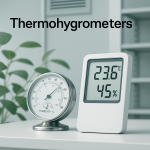
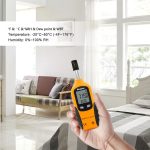
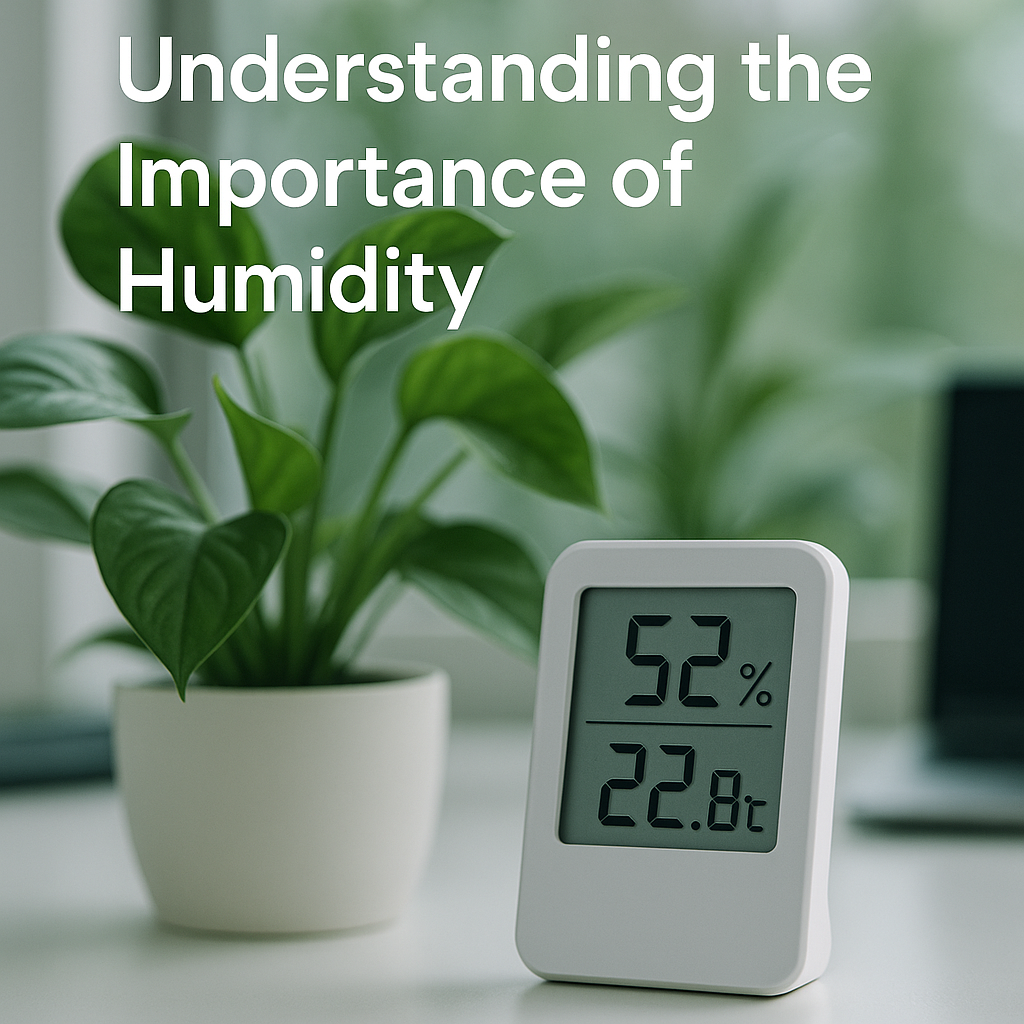
Humidity testers are generally available in analog and digital forms. Analog hygrometers use a mechanical material or assembly that responds to moisture, while digital hygrometers rely on electronic sensors. Digital models often provide faster readings and may include temperature displays, minimum and maximum records, alarms, or data logging. However, accuracy depends on the sensor, calibration, placement, and condition of the device—not simply on whether it is analog or digital.
How Does a Humidity Tester Work?
Traditional analog humidity testers may use a hair hygrometer or a moisture-sensitive coil. Natural fibers, including treated human or animal hair, and synthetic materials such as nylon or polyethylene terephthalate (PET) change length as they absorb or release moisture. A mechanical linkage converts this expansion or contraction into movement on a dial or scale. Analog hygrometers can provide useful readings, but they may respond slowly and require periodic calibration.
Digital humidity testers typically use capacitive or resistive sensors. A capacitive sensor contains conductive elements separated by a moisture-sensitive dielectric material, often a polymer; changes in humidity alter the material’s electrical capacitance. A resistive sensor uses a ceramic or polymer material whose electrical resistance changes as moisture levels change. Some specialized instruments use thermal-conductivity sensing to assess humidity by comparing how gases containing different amounts of water vapor conduct heat. The device processes the sensor signal and displays the result, usually as a percentage of relative humidity.
Why Is a Humidity Tester Essential?
Humidity affects comfort, health, materials, equipment, and industrial processes. Persistently high humidity can encourage mold growth and condensation, potentially contributing to allergic or respiratory symptoms and damaging walls, furnishings, or stored goods. Very dry air may contribute to dry skin, irritated nasal passages, and static electricity. In greenhouses, humidity influences plant growth and disease risk; in laboratories, controlled conditions can support consistent experiments; and in manufacturing or storage facilities, excess moisture may promote corrosion while dry conditions can increase electrostatic discharge risks.
A humidity tester provides the measurements needed to decide whether corrective action is necessary. Depending on the cause, that may involve using a humidifier or dehumidifier, improving ventilation, adjusting heating or air conditioning, or addressing moisture intrusion. Readings that remain unexpectedly high or low may also point to an HVAC problem, poor airflow, condensation, or a leak in the building envelope. For meaningful results, place the tester away from direct sunlight, exterior doors, vents, radiators, humidifiers, and other localized heat or moisture sources.
Conclusion: Choosing and Using a Humidity Tester
A humidity tester is a practical tool for monitoring relative humidity and identifying conditions that may affect comfort, health, plants, materials, or equipment. Choose a model with suitable accuracy, range, response time, and calibration options for the intended setting. Features such as temperature measurement, minimum and maximum records, alarms, or data logging may also be useful. Most importantly, treat the reading as diagnostic information: monitor changes over time, confirm unusual results, and address the underlying source of excessive moisture or dryness.