How to Measure Humidity and Understand Relative Humidity
Humidity describes the amount of water vapor in the air. At home, the most practical way to measure it is with a hygrometer, which usually displays relative humidity as a percentage (% RH). Monitoring indoor humidity helps protect musical instruments, electronics, furnishings, and building materials while also supporting a comfortable living environment. Excess moisture can contribute to condensation, damp surfaces, and mold growth, while very dry air may cause discomfort and increase evaporation from skin and other materials.
What Is Dew Point?
The dew point is the temperature to which air must cool before it becomes saturated and reaches 100% relative humidity. If the air cools further, water vapor may condense into liquid water, creating dew, fog, or condensation on surfaces.
A higher dew point means the air contains more moisture. Dew points below 60°F (about 15.6°C) are generally perceived as relatively comfortable, although comfort varies by person and climate. A dew point above 65°F (about 18.3°C) often feels humid because the air contains more water vapor.
What Is the Relationship Between Relative Humidity and Dew Point?
Dew point and relative humidity both describe atmospheric moisture, but they measure it differently. Dew point provides a more direct indication of the amount of moisture in the air. Relative humidity describes how close the air is to saturation at its current temperature.
When the air temperature and dew point are equal, relative humidity is 100%. If the temperature falls below the dew point, condensation can begin. However, 100% relative humidity does not necessarily mean precipitation will occur. It means the air is saturated at that temperature; depending on conditions, saturation may contribute to dew, fog, clouds, or condensation.
Relative humidity changes when air temperature changes, even if the actual moisture content remains constant. It is commonly expressed as the ratio of the air’s actual vapor pressure to its saturation vapor pressure at the same temperature. Therefore, dew point alone is not enough to calculate relative humidity—the current air temperature is also required.
How to Measure Humidity
A hygrometer measures relative humidity. Different hygrometers use changes in electrical properties, temperature, or other moisture-sensitive characteristics to calculate % RH. One of the simplest traditional instruments is a sling psychrometer, which uses two thermometers: one with a dry bulb and one with a wet bulb. Learn more about the different types of hygrometers and their uses.

How to Use a Psychrometer to Measure Humidity
A psychrometer, also called a sling psychrometer, contains two thermometers. The dry-bulb thermometer measures the air temperature, while the wet-bulb thermometer has a water-moistened cloth or wick around its bulb. As water evaporates from the wick, it cools the wet bulb. Faster evaporation produces a larger difference between the two temperature readings and generally indicates lower relative humidity. When relative humidity reaches 100%, little or no evaporative cooling occurs, so both thermometers show approximately the same temperature. Compare the dry-bulb and wet-bulb readings with a psychrometric chart or calculator to determine relative humidity.
Other Types of Hygrometers for Measuring Humidity
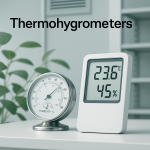
Analog Hygrometers
Analog hygrometers provide a simple, battery-free display and are often inexpensive. Their accuracy and response time vary by model, and some inexpensive units may differ from a digital reference by around 10 percentage points. Check the manufacturer’s stated tolerance and compare or calibrate the instrument when accurate readings are important.
Digital Hygrometers
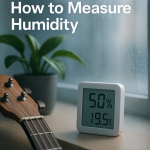
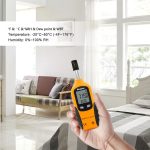
Digital hygrometers use electronic sensors to monitor relative humidity. Many models also measure temperature, while some include a clock, alarms, remote sensors, or separate indoor and outdoor readings.
A useful feature of many digital hygrometers is the ability to record minimum and maximum humidity levels. This reveals changes that a single reading may miss. Accuracy varies between devices, and some models require calibration or adjustment to maintain reliable readings.
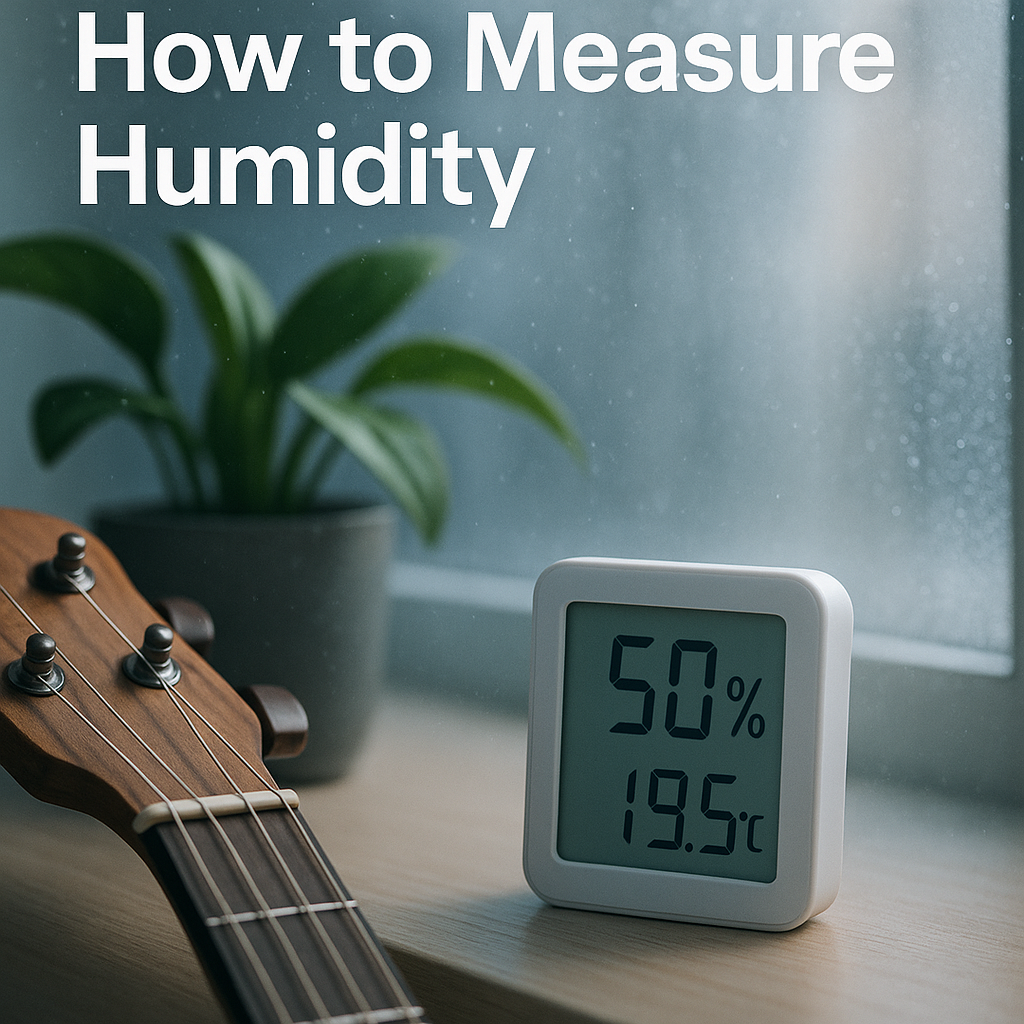
A basic digital hygrometer usually has an LCD that displays temperature and relative humidity. More advanced devices may display the time, historical readings, or indicators showing whether the humidity is within a selected range. You can compare recommended hygrometers for indoor humidity monitoring.
Why Should You Monitor Humidity Levels?
A home hygrometer provides continuous information about indoor relative humidity. High humidity does not necessarily mean the actual temperature is high, but it can make warm conditions feel hotter because perspiration evaporates less efficiently. Low humidity can increase evaporation and contribute to dry skin, irritated eyes, and other discomfort.
A commonly used target for homes is approximately 30%–50% RH, although the appropriate range depends on the climate, season, building, and items being protected. Managing moisture can reduce condensation and discourage conditions that support mold and dust mites. It can also help protect wood, musical instruments, walls, furniture, and other moisture-sensitive materials.
Outdoor relative humidity offers useful weather context, but it should be considered alongside temperature and dew point. Relative humidity alone does not determine whether it is comfortable or safe to go outside. During hot weather, temperature, dew point, shade, wind, and heat-index guidance provide a more complete picture.
When relative humidity is high, sweat evaporates more slowly, reducing the body’s ability to cool itself. Saturated air may also produce fog, mist, dew, or condensation when conditions are suitable. A hygrometer makes these moisture changes easier to track indoors, allowing you to decide when ventilation, humidification, or dehumidification may be appropriate.