Best Temperature Meter: How to Choose the Right Thermometer
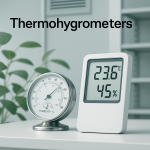
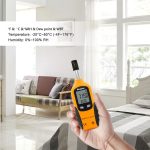
A temperature meter—more commonly called a thermometer—measures temperature in homes, outdoor spaces, kitchens, laboratories, storage areas, and other environments. Some models also measure relative humidity (RH); these combination devices are known as thermometer-hygrometers or humidity monitors.
The best temperature meter is the one that matches where and how you plan to use it. A basic indoor-outdoor thermometer is often sufficient for checking current room and outdoor temperatures. If you also need humidity readings, historical data, remote access, or broader weather information, choose a thermometer-hygrometer or connected weather station.
Before buying, compare the stated accuracy and measurement range, sensor arrangement, display readability, wireless range, humidity capability, power requirements, and setup process. The five models below cover several use cases, from compact household thermometers to an app-connected home weather system.
Temperature Meter Comparison
| Temperature meter | Best suited to | Notable features | Important limitation |
|---|---|---|---|
| La Crosse Outdoor Thermometer | Basic indoor and outdoor temperature checks | Compact design, time display, straightforward setup | No backlight; humidity measurement is limited to indoors |
| ThermoPro TP62 Digital Wireless Hygrometer | Indoor and outdoor temperature and humidity monitoring | Backlit display, wireless readings, compact design | Backlight remains on briefly; no minimum or maximum temperature tracking listed here |
| WeatherFlow Tempest Weather System | Connected home weather monitoring | Solar-powered outdoor sensor, indoor hub, app integration | Less portable; the hub requires AC power |
| Taylor Wireless Indoor and Outdoor Thermometer | At-a-glance indoor and outdoor temperature monitoring | Large outdoor temperature digits, portable design | Limited additional weather information |
| AcuRite Wireless Indoor Outdoor Thermometer | Readable temperature and humidity monitoring | Large display and straightforward layout | Fewer advanced functions than a connected weather system |
What to Look for in a Temperature Meter
Choose a temperature meter by starting with your measurement requirements, not the length of the feature list. Accuracy, suitable sensor placement, display readability, durability, and dependable power generally matter more than connectivity features you may never use.
Accuracy and resolution: Accuracy indicates how close a reading is to the actual temperature. Resolution is the smallest temperature increment the device displays. A thermometer that shows tenths of a degree is not necessarily more accurate than one that displays whole degrees. For applications where small differences matter, review the manufacturer’s stated accuracy, operating range, and calibration guidance.
Measurement range: Confirm that the thermometer is designed for the lowest and highest temperatures you expect. Indoor climate monitoring, outdoor weather observation, cooking, refrigeration, and industrial measurements can require different ranges, probes, and sensor designs. A general household thermometer may not be appropriate for food, medical, or industrial use.
Sensor location: A wireless outdoor sensor measures exterior conditions while the receiver remains indoors. Place the sensor away from direct sunlight, radiators, appliances, exhaust vents, and surfaces that absorb or reflect heat. It should also have adequate airflow. Poor placement can produce unrepresentative readings even when the thermometer is working correctly.
Display and usability: Large digits, distinct labels, a backlight, and uncomplicated controls make a temperature meter easier to use. Consider whether you need to read it from across a room, in low light, or without opening a mobile app. Also check whether indoor and outdoor readings appear together or require switching between screens.
Humidity measurement: Choose a thermometer-hygrometer when you need both temperature and relative humidity. RH describes the amount of water vapor in the air relative to the maximum it could hold at the same temperature, expressed as a percentage. Because RH changes with temperature, seeing both measurements provides more context than temperature alone. For practical guidance, see how to measure humidity.
Data logging and connectivity: Bluetooth, Wi-Fi, mobile apps, alerts, and historical records are useful for remote monitoring and identifying changes over time. These functions can also make setup more involved and may depend on batteries, an indoor hub, internet access, or continued app compatibility.
Durability and power: Outdoor sensors need protection appropriate to their installation location. Devices used in workshops, greenhouses, basements, or storage areas may also face damp conditions or frequent handling. Check how each sensor and display is powered, whether the receiver needs continuous AC power, and how easily batteries can be replaced.
Price and value: A basic thermometer is often the better value when you only need a current temperature reading. Paying more may be worthwhile for humidity measurement, historical records, remote access, alerts, or additional environmental data. More features do not automatically mean better temperature accuracy.
Which Temperature Meter Should You Choose?
- For basic indoor-outdoor readings: Choose a compact wireless thermometer with an uncomplicated display, such as the La Crosse or Taylor model reviewed below.
- For temperature and relative humidity: Consider a combination thermometer-hygrometer such as the ThermoPro TP62 or AcuRite wireless model.
- For connected weather monitoring: The WeatherFlow Tempest is intended for users who want app access and several types of environmental data rather than temperature alone.
- For easy viewing: Prioritize large digits and clear labels. Choose a backlit display if you expect to check readings in dim conditions.
Temperature Meter Reviews
1. La Crosse Outdoor Thermometer

This La Crosse thermometer is designed for straightforward indoor and outdoor temperature monitoring. The compact receiver also shows the time in either a 12-hour or 24-hour format, making it suitable for a desk, counter, shelf, or other small indoor location.
Its main strengths are its simple setup, small footprint, and readable display. Its limitations are more relevant if you want detailed environmental monitoring: humidity sensing is limited to indoors, switching between indoor and outdoor readings requires several button presses, and the display does not have a backlight.
2. ThermoPro TP62 Digital Wireless Hygrometer
The ThermoPro TP62 is a wireless digital thermometer-hygrometer that displays indoor and outdoor temperature and humidity. Its compact receiver and backlit screen make it suitable for general household monitoring, especially when both measurements are useful.
The backlight improves visibility in dim conditions but remains illuminated for only a limited period. The model described here also does not track minimum and maximum temperatures. That limitation matters if you need to review daily extremes rather than check only the current conditions.
3. WeatherFlow Tempest Weather System
The WeatherFlow Tempest is a connected weather system rather than a basic standalone thermometer. It combines a solar-powered outdoor sensor with an indoor hub and monitors environmental conditions that include temperature, humidity, and solar radiation. Its app integration allows users to view weather information remotely.
Tempest provides a broader view of outdoor conditions than the simpler thermometers in this comparison, but that capability comes with additional setup requirements. The system is less portable, and its indoor hub depends on AC power. Check the installation, network, and power requirements before choosing it for home weather monitoring.
4. Taylor Wireless Indoor and Outdoor Thermometer
The Taylor wireless thermometer displays the outdoor temperature in large digits, with the indoor temperature shown in smaller digits below. This visual hierarchy makes the outdoor reading easy to identify from a distance or with a quick glance.
Readability, portability, and a straightforward design are its main advantages. It is primarily a temperature monitor, so it does not provide the wider range of environmental measurements, historical information, or connected functions associated with a full weather system.
5. AcuRite Wireless Indoor Outdoor Thermometer
The AcuRite wireless indoor-outdoor thermometer presents temperature and humidity information on a large display. Its clear arrangement is designed for routine household monitoring without requiring the more involved setup of a connected weather station.
It may be a practical choice when visible, easy-to-understand temperature and humidity readings matter more than advanced functions. Compared with a connected weather system, it offers fewer options for remote access, historical records, and broader environmental monitoring.
How to Get More Reliable Temperature Readings
- Place the sensor where air can circulate freely. Keep it away from direct sunlight, radiators, appliances, vents, windows, and other sources of artificial heating or cooling.
- After moving or installing a sensor, allow enough time for it to adjust to the temperature of its new surroundings before assessing the reading.
- Protect outdoor sensors in accordance with the manufacturer’s instructions. Do not place a sensor in an exposed or water-prone location unless it is designed for those conditions.
- If a reading seems unusual, compare it with another known-good thermometer placed nearby under the same conditions.
- Replace weak batteries and inspect the wireless connection when readings stop updating, disappear, or become inconsistent.
- If the thermometer supports calibration, follow the manufacturer’s procedure. A display with finer resolution does not prove that the instrument is accurately calibrated.
Temperature Meter or Hygrometer: What Is the Difference?
A temperature meter, or thermometer, measures temperature. A hygrometer measures humidity, usually as relative humidity (RH). A combination thermometer-hygrometer measures both temperature and RH, while the humidity sensor is the component that detects moisture conditions.
Temperature and relative humidity describe different but related aspects of the environment. Temperature is commonly shown in degrees Celsius (°C) or degrees Fahrenheit (°F), while RH is expressed as a percentage (% RH). Because relative humidity changes as air temperature changes, monitoring both can provide a more complete picture of conditions associated with comfort, condensation, mold risk, and storage. This can be useful in basements, bedrooms, bathrooms, greenhouses, offices, and storage areas.
FAQ: Choosing a Temperature Meter
Which temperature meter is best for indoor use?
For basic indoor monitoring, choose a compact thermometer with a clear, readable display. The La Crosse and Taylor models are relevant options in this comparison because they emphasize compactness or readability. If indoor humidity also matters, select a thermometer-hygrometer rather than a temperature-only device.
Can these temperature meters measure humidity?
Some can. The ThermoPro TP62 and AcuRite wireless thermometer provide both temperature and humidity readings. The La Crosse model described here measures indoor humidity only. Before buying, confirm whether each sensor measures temperature, humidity, or both—particularly if you need outdoor RH readings.
Are there smart, app-connected temperature meters?
Yes. The WeatherFlow Tempest is the connected option in this comparison, allowing remote access to home weather information through its app. Connected systems usually require more setup than standalone thermometers and may depend on an indoor hub, AC power, network access, or a mobile application.
Which thermometer is easiest to read?
The Taylor wireless thermometer is designed for at-a-glance viewing, with the outdoor temperature shown in large digits. In general, look for large numbers, distinct indoor and outdoor labels, good contrast, and a backlight if you will read the display from a distance or in low light.
Can these thermometers provide outdoor weather information?
Wireless indoor-outdoor thermometers can report outdoor temperature when the external sensor is positioned correctly and remains within wireless range. A weather system such as the WeatherFlow Tempest monitors a broader set of outdoor conditions, including humidity and additional environmental data.
Do I need a hygrometer as well as a thermometer?
Choose a hygrometer when humidity is relevant to comfort, condensation, mold risk, storage, or plant care. For basements, bedrooms, bathrooms, greenhouses, offices, and storage areas, a combination thermometer-hygrometer is often more informative than a temperature-only meter.
Conclusion
The right temperature meter depends on the measurements you need and the environment in which the device will operate. Choose a simple indoor-outdoor thermometer for current temperature readings, a thermometer-hygrometer when relative humidity matters, or a connected weather system when you need remote access and a wider range of environmental data.
Before purchasing, verify the stated accuracy, measurement range, sensor arrangement, display design, power source, connectivity requirements, and intended installation location. Matching these practical details to your use case is more valuable than selecting a thermometer solely because it has the most features or the highest price.