A humidity tester measures moisture in the air so you can identify conditions that may contribute to mold, corrosion, static electricity, material damage, or discomfort. These instruments are used in homes, greenhouses, laboratories, offices, and manufacturing facilities. This article explains what a humidity tester measures, how analog and digital models work, and why accurate readings matter.
What Is a Humidity Tester?
A humidity tester, commonly called a hygrometer, is an instrument that measures humidity in the surrounding air. Most models report relative humidity (% RH), which expresses the amount of water vapor in the air relative to the maximum it could hold at the same temperature. Because relative humidity changes with temperature, the two measurements should be considered together when assessing indoor conditions.
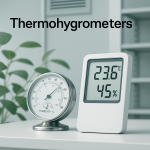
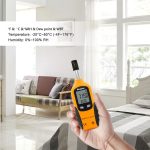
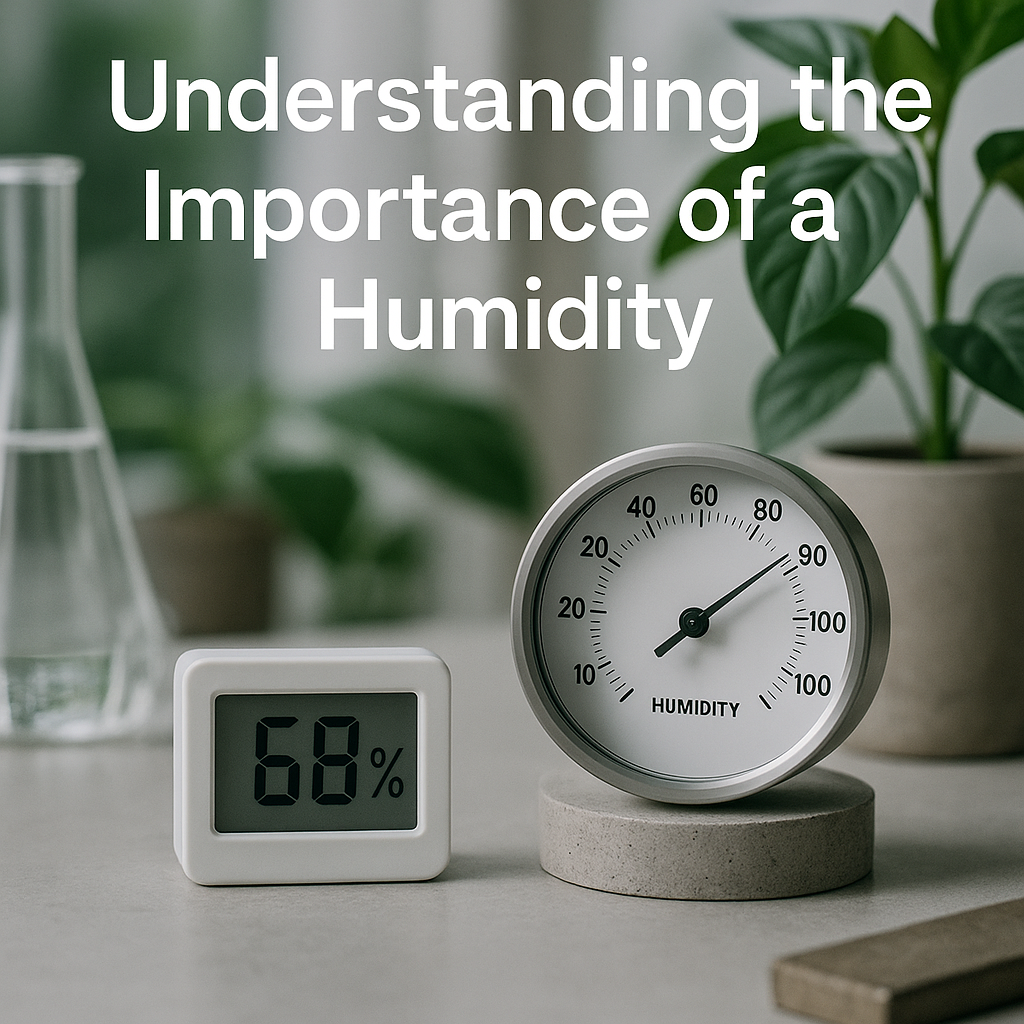
Humidity testers are generally available as analog or digital instruments. Analog hygrometers use a mechanical element or humidity-sensitive material to move a pointer across a scale. Digital hygrometers use electronic sensors and typically display both relative humidity and temperature. A digital display does not automatically guarantee greater accuracy; performance depends on the sensor, calibration, specified measurement range, response time, and operating conditions.
How Does a Humidity Tester Work?
Traditional analog hygrometers often use a strand, bundle, or coil made from a humidity-sensitive material. Natural fibers such as human hair, as well as synthetic materials including nylon and polyethylene terephthalate (PET), change length as they absorb or release moisture. A mechanical linkage converts this expansion or contraction into a relative humidity reading on a dial. Analog instruments may require periodic calibration to maintain useful accuracy.
Digital humidity testers commonly use capacitive or resistive sensors. A capacitive sensor contains conductive layers separated by a dielectric material, often a polymer; absorbed moisture changes the material’s electrical capacitance. A resistive sensor uses a humidity-sensitive ceramic or polymer whose electrical resistance changes as moisture levels vary. Some specialized instruments use thermal-conductivity sensing, which evaluates how moisture affects the thermal properties of a gas. The tester’s electronics convert the sensor response into a humidity value shown on the display or recorded by a connected data logger.
Why Accurate Humidity Measurement Matters
Humidity affects health, comfort, materials, equipment, and industrial processes. Persistently high humidity can support mold growth and condensation, while moisture may also contribute to corrosion. Very dry air can aggravate dry skin and nasal or respiratory discomfort, and it can increase static-electricity problems around sensitive electronics. Greenhouses use humidity measurements to manage plant-growing conditions, laboratories may need controlled humidity for repeatable work, and manufacturing facilities monitor it to protect products, materials, and equipment.
A humidity tester provides the measurements needed to decide whether conditions require attention. Depending on the cause, corrective action may include ventilation, humidification, dehumidification, temperature control, or investigation of moisture intrusion. Unexpected or persistent readings can also indicate problems such as an HVAC fault, inadequate airflow, condensation, or a leak in the building envelope. For dependable results, place the instrument away from direct sunlight, heaters, vents, kitchens, bathrooms, and other local sources of heat or moisture unless those specific areas are being tested.
Choosing and Using a Humidity Tester
A humidity tester is useful wherever moisture levels affect occupants, plants, materials, experiments, or equipment. Choose a model with a stated accuracy, measurement range, and response time suited to the application; features such as minimum and maximum readings, alarms, temperature measurement, or data logging may also be valuable. Check readings in a representative location and follow the manufacturer’s calibration and placement instructions. A suitable humidity tester cannot correct moisture problems by itself, but it provides the evidence needed to identify changes and choose an appropriate response.