


As an Amazon Associate we earn from qualifying purchases.
A psychrometer is a type of hygrometer that measures relative humidity using two thermometers — one dry, one wrapped in a wet wick. As water evaporates from the wet bulb it cools down, and the temperature gap between the two readings tells you how dry the air is.
What is a Psychrometer?
A psychrometer is a type of hygrometer that measures the relative humidity in the atmosphere. It is different in shape than the hygrometer. Similarly, it is composed of two thermometers: dry and wet bulb thermometers. Dry bulb thermometer uses its dryness and exposure for the measurement of temperature. Whereas, wet-bulb thermometer measures temperature as the bulb dipped into the water. Both thermometers are vital to measuring the relative humidity. Two bulbs of both thermometers are connected with each other. However, precautionary measures must be taken while calculating the relative humidity.
It is important to note that psychrometers are based on traditional method. However, digital psychrometers are now available in the market. Digital psychrometers are more accurate, but they need battery power. In this article, we will talk about the traditional measurement method. You can also check What is the Humidity Today.
How to measure humidity with Psychrometer?
Sling Psychrometer consists of two bulbs of thermometers. Traditional Psychrometers also known as Sling Psychrometers. Psychrometer works on the base of the evaporation and cooling process. After removing the wet-bulb from the water, the bulb starts cooling down and water starts evaporating. Therefore, the cooling of the bulb estimates the amount of water evaporating. In most cases, the wet-bulb hardly changes its temperature. The little evaporation of water gives us the estimation. Evaporation takes place at a faster rate if the air is dry. As a result temperature of the wet-bulb drops significantly.
Tip: The wet-bulb temperature should never read higher than the dry bulb. If it does, the water you used was warm — let it reach room temperature and repeat the reading.
Swing the psychrometer through the air for about one minute. After this interval time, the period temperature must be noted for both bulbs. The difference between the temperature of both bulbs is recorded. Let’s suppose the temperature of dry bulb = 38°C and wet bulb = 28°C. A graph is drawn where the y-axis shows the dry-bulb temperature and the x-axis shows the difference between both temperatures. The point where both axes meet each other gives the relative humidity. As this process is complicated, it demands practice. Therefore, an individual must be experienced enough to calculate the relative humidity. It is a good practice to measure the reading twice. In this way, there will be no confusion in the readings.
Uses of Psychrometer:
Many people prefer digital hygrometers because of the automatic system. However, psychrometers still in use in various areas over the world.
- Psychrometers are carried on ships as a backup temperature and humidity instrument
- Also used in Coating Industry to measure the paint sensitivity to temperature
- Many instruments come to market with pre-installed psychrometer (Guitar, Piano, and Violin)
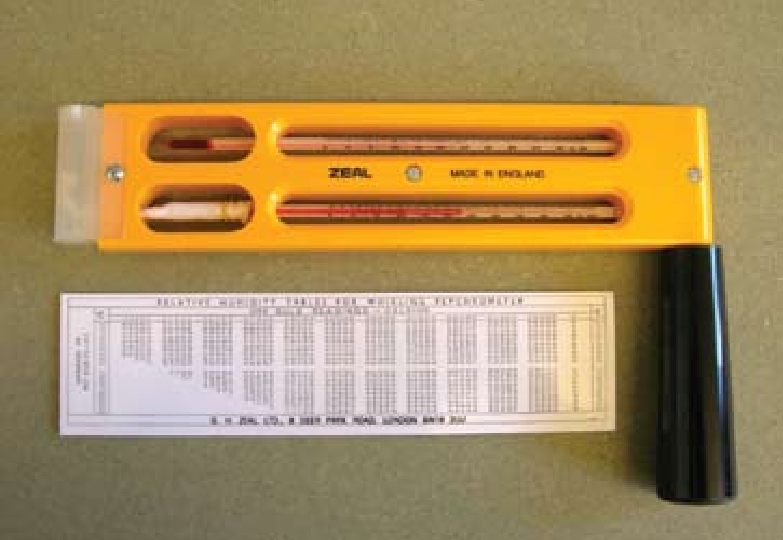
Psychrometer has two different types: the sling psychrometer and the aspirating psychrometer. Sling Psychrometer is also the general psychrometer and it has two bulbs. A handle controls the sling psychrometer. As discussed before, it has two thermometers. One thermometer is wet and the other one is dry. Therefore, Sling Psychrometer is considered a manual device. On the other hand, the aspirating psychrometer is battery powered. It is similar to battery-powered hygrometer.
Difference Between a Hygrometer and a Psychrometer
A psychrometer is a type of hygrometer. “Hygrometer” is the general term for any instrument that measures humidity; a psychrometer is the specific kind that derives relative humidity from two thermometers — a dry bulb and a wet bulb — by measuring how much the wet bulb cools as water evaporates from it. Every psychrometer is a hygrometer, but most hygrometers are not psychrometers.
| Hygrometer (the general category) | Psychrometer (one specific type) | |
|---|---|---|
| What it is | Any instrument that measures the humidity of the air | A hygrometer built from a dry-bulb and a wet-bulb thermometer |
| How it measures | Directly — usually a capacitive or resistive electronic sensor, or a moisture-sensitive material such as hair in older mechanical models | Indirectly — from the temperature gap between the two bulbs, read against a psychrometric chart or table |
| Accuracy | Around ±2–3% RH for a decent consumer digital unit; cheap analog dials drift considerably further, and all sensors drift over time | Can match or beat a consumer digital hygrometer, but only with good technique — adequate airflow, a clean wet wick, and accurate thermometers |
| Effort to read | Instant — glance at the display | Manual — wet the wick, swing or ventilate for about a minute, read both bulbs, then look up the result |
| Typical use | Homes, humidors, greenhouses, storage rooms, terrariums | Weather stations, laboratories, HVAC and coating work, teaching |
| Power | Battery, or none at all for mechanical models | None for a sling psychrometer; aspirating models run a small fan on batteries |
The confusion is understandable: the two instruments answer the same question, and it is only the method and the era they come from that differ.
The difference is one of category and method, not of purpose. Both end up telling you the relative humidity. A psychrometer gets there the older way, by evaporation and a temperature difference; most hygrometers sold today get there electronically, with a sensor that responds to moisture directly. When it comes to using a hygrometer or psychrometer, the priorities of the department vary. For example, weather stations use psychrometers. However, at home, a hygrometer is a good choice.
The choice between a hygrometer and a psychrometer depends on the need. For everyday use a hygrometer is the practical choice — our digital vs analog hygrometer comparison covers which type to pick. An aspirating psychrometer is the better option where a reference reading matters more than convenience. However, one should also know how to calibrate a hygrometer to get an accurate reading.
Best Psychrometer to Buy
If you are looking to buy a digital psychrometer then always focus on quality and price. Below is one of the best and cheapest psychrometer that you can buy easily on Amazon. Although, many psychrometers are available to purchase online but we get the best one for you. If you need an everyday humidity reading rather than a wet-bulb instrument, see our ranked best hygrometers for home use instead.
Digital Psychrometer Thermo-Hygrometer
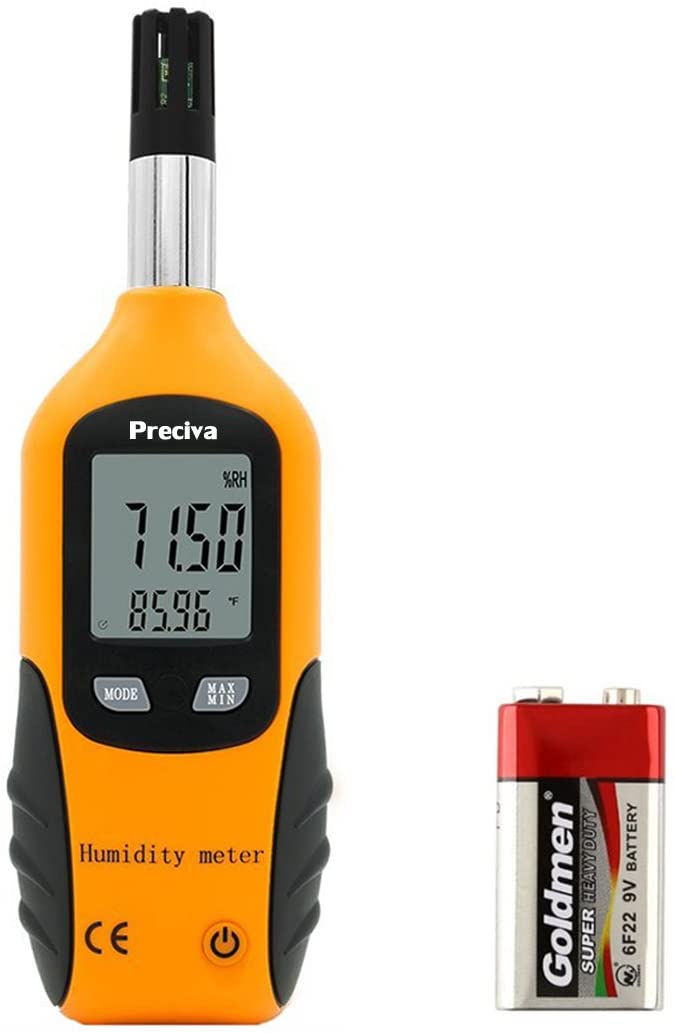
Digital Psychrometer Thermo-Hygrometer, LCD Mini Temperature and Humidity Meter with Dew Point have multiple features. It is a complete psychrometer and hygrometer. It uses the latest technology and helps the users to measure relative humidity.
Specifications
- An ideal psychrometer to use in industries such as Agriculture
- Measure the relative humidity in seconds with the latest technology
- Dual display of both temperature and hygrometer with 0.1% error
- Data Hold and Auto Power Off Feature
- Your first choice to get the best results
Product Details
- Weight: 143g
- Power: One standard 9V, NEDA 1604 or 6F22 battery
- Sampling Rate: 2.5 samples per second
- Display: Large 4-1/2 dual digital LCD display
✓ Pros
- Measures both temperature and humidity instantly
- Fast response time without any hassle
- BIG LCD Display that works in both day and night
- An ideal choice for accurate measurements
- Two in one sensor to use in various industries
✗ Cons
- It works with a battery power of 9V and no concept to use without battery
- The sensor doesn’t work in the presence of light
- Working in extreme conditions affect the accuracy of measurements
- Recovery takes a lot of time in the normal environment
What is the difference between a hygrometer and a psychrometer?
A psychrometer is a type of hygrometer. Hygrometer is the general term for any instrument that measures humidity; a psychrometer is the specific type that uses a dry-bulb and a wet-bulb thermometer and derives relative humidity from the difference between them. Every psychrometer is a hygrometer, but most hygrometers are not psychrometers.
What does a psychrometer measure?
A psychrometer measures relative humidity, indirectly. It reads two temperatures, dry bulb and wet bulb, and the gap between them is converted to relative humidity using a psychrometric chart or table. Because it reads the dry-bulb thermometer as well, it gives you air temperature at the same time.
How does a psychrometer work?
Water evaporating from the wet bulb cools it. Dry air makes that water evaporate faster, so the wet bulb drops further below the dry bulb. A large gap between the two readings means dry air, a small gap means humid air, and no gap at all means the air is saturated.
Is a psychrometer more accurate than a digital hygrometer?
It can be, but only with good technique. A sling psychrometer needs adequate airflow, a clean and properly wetted wick, and two accurate thermometers. A calibrated consumer digital hygrometer is typically accurate to within 2 to 3 percent relative humidity and needs none of that care, which is why it wins for everyday use.
What is a sling psychrometer?
A sling psychrometer is the manual version: two thermometers mounted on a frame with a handle, so they can be whirled through the air. Swinging it forces air past the wet bulb, which is what makes the evaporation, and therefore the reading, consistent. The aspirating type does the same job with a small fan.

2 thoughts on “What is a Psychrometer?”