

Choose a humidor hygrometer by fit, specified performance and the way you will check it. User adjustment is useful, but it does not automatically make a less accurate sensor outperform a better one. Start with the scenario cards, then use the purchase checklist below.
Which humidor hygrometer should you buy?
It depends on the box it is going into. Find the case that matches yours — all four units are reviewed in full in our best hygrometer guide.
Desktop humidor, 25–150 cigars
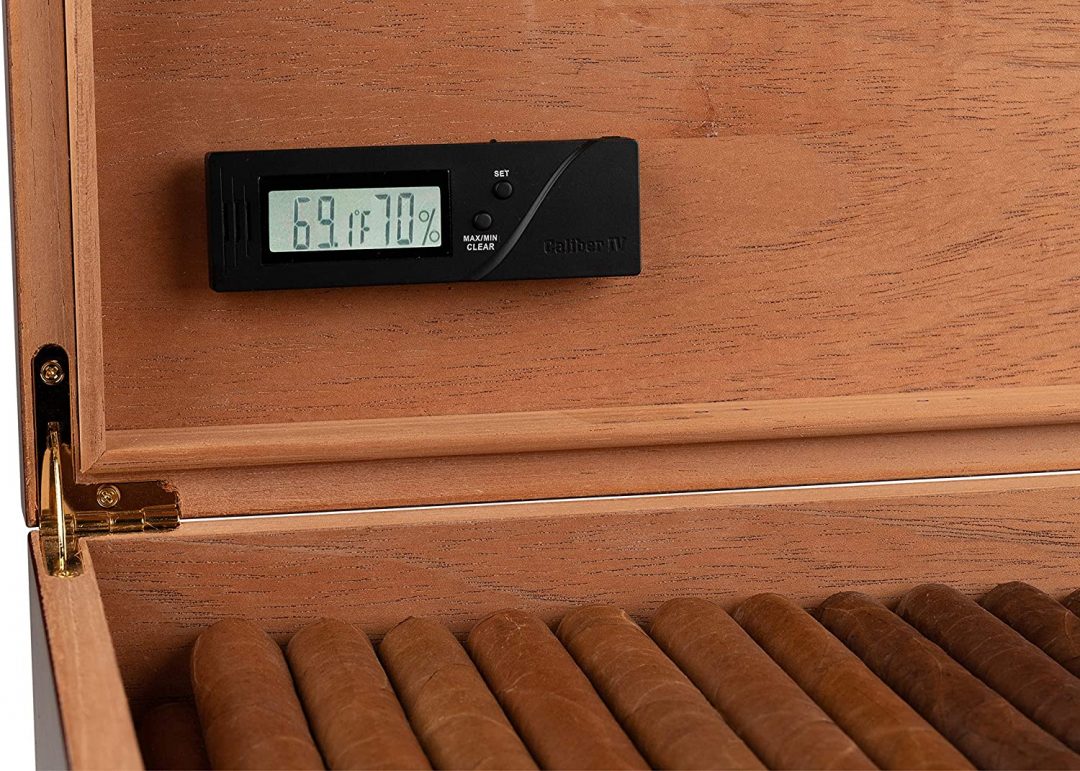
Why it fits: the model offers an adjustment feature. Use it according to the manual after a suitable reference check; an offset does not correct every source of error. The slim 4 × 1.3 × 0.4 in body sits among the cigars, the magnetic mount lifts off for testing, and it keeps three-day high/low averages for humidity and temperature.
Watch for: the maker states ±1% RH. Treat that as a claim and salt-test it on arrival anyway.
Classic dial, no battery
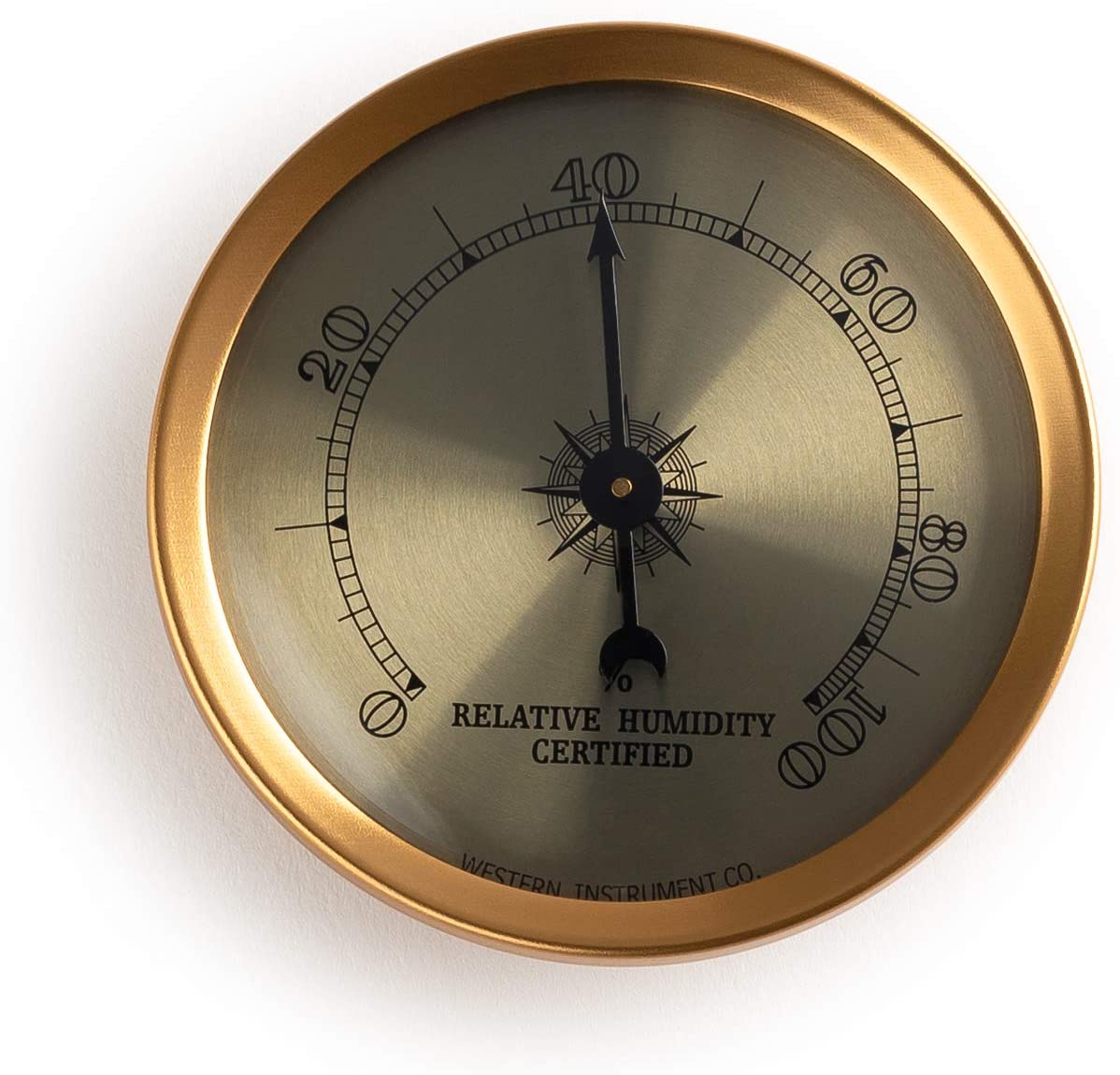
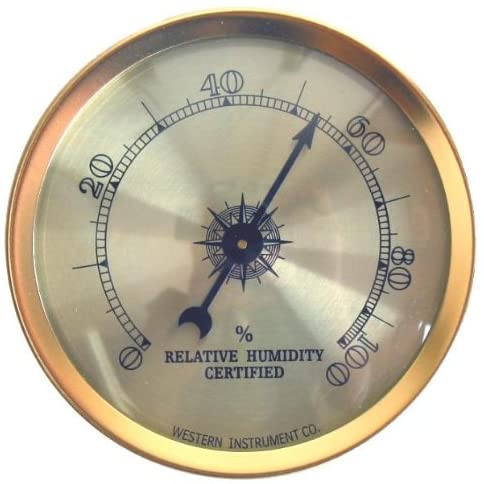
Why it fits: a mechanical dial you can re-zero by hand, in an aluminium case with a glass face and a magnetic mount. Nothing to power, and it looks the part in a display humidor.
Watch for: response and accuracy depend on the exact model. Check its specification, adjustment method and a suitable reference before relying on it; add temperature monitoring if needed.
Cabinet, walk-in or off-site
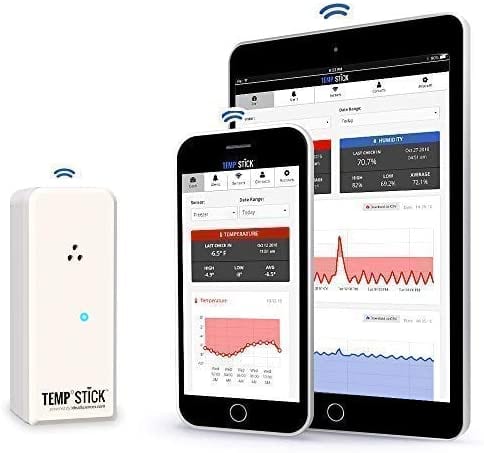
Why it fits: it sends a text, email or app alert when humidity or temperature crosses your limit, logs the history, and has no subscription fee. That matters when a failed humidifier in a cabinet you cannot see would otherwise go unnoticed for weeks.
Watch for: at 3.5 × 1.4 × 1.25 in it is too bulky for a small desktop box, and it costs many times what a Caliber IV does. A large cabinet still wants two or three sensors at different heights.
Tight budget or a second sensor
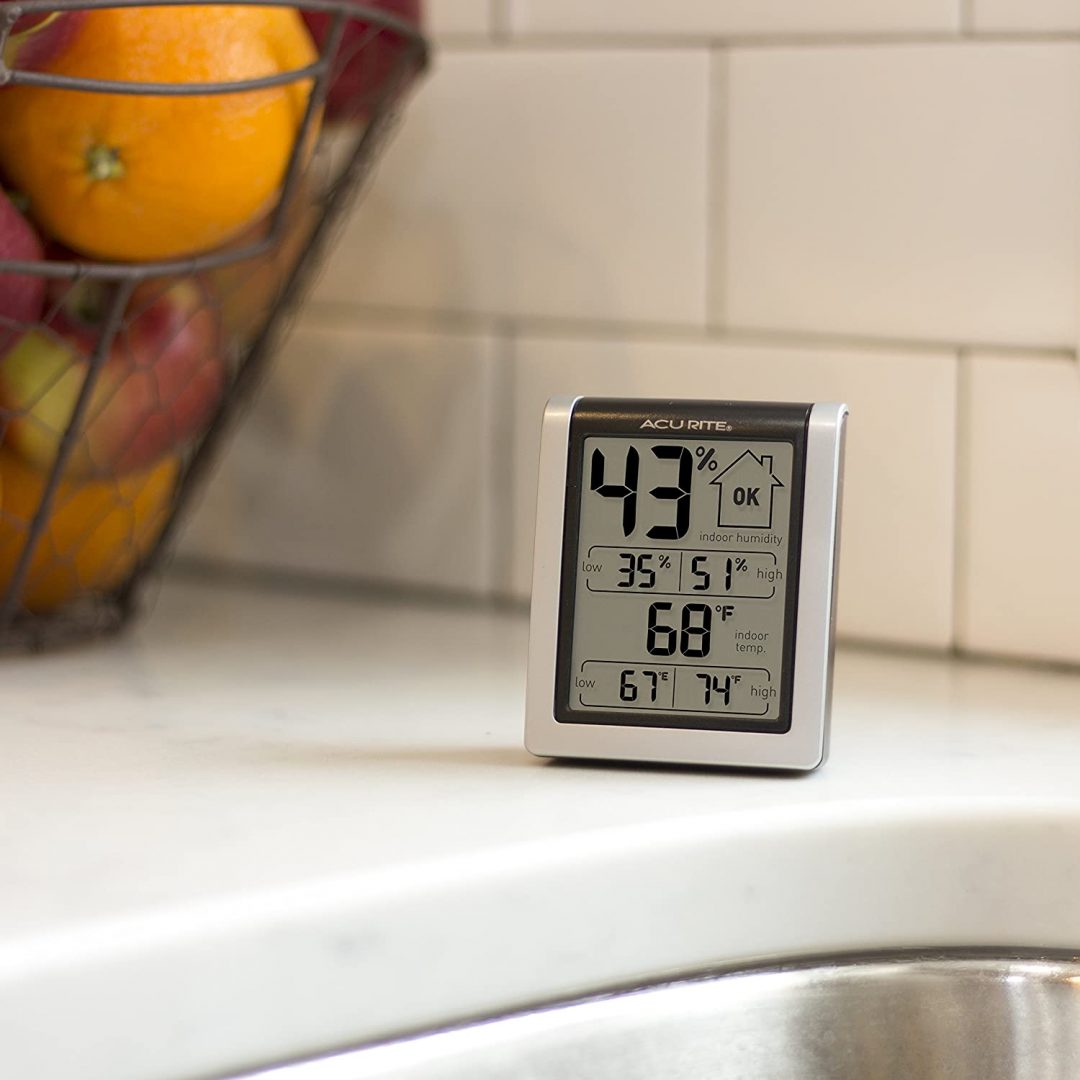
Why it fits: the cheapest route to a digital humidity and temperature reading with a daily high and low, and a sound second opinion when you want to check for a gradient across a larger box.
Watch for: it has no adjustment mode, so salt-test it, write the offset on a label and apply it every time. It is a room monitor, so check it physically fits your humidor before ordering.
Choosing the best hygrometer for humidor use is not really a shopping problem. It is a measurement problem wearing a shopping problem’s clothes. The market is full of units that look identical, quote the same accuracy figure, and behave very differently once they are sealed inside a box of cedar and tobacco. Price correlates only loosely with performance.
This guide sets out the six specifications that genuinely affect whether a hygrometer for humidor duty tells you the truth, the ones that exist mainly to fill bullet points on packaging, and how to place and verify whatever you end up buying. Where we name a product we link to it on Amazon, and as an Amazon Associate we earn from qualifying purchases at no extra cost to you — but the aim is still to leave you able to judge any unit on the shelf yourself.
Check these details before ordering
| Question | What to verify | Why it affects your choice |
|---|---|---|
| Will it fit? | Measure the available space, mounting area and clearance when the lid closes. | Capacity in cigar counts does not establish instrument fit. |
| Does the accuracy claim cover your use? | Find the humidity and temperature range and whether the figure is typical or a limit. | A claim at one condition may not apply throughout storage. |
| Can you adjust and verify it? | Read the exact model manual and plan a reference check near the intended range. | Adjustment and independent verification serve different purposes. |
| Do you need history or remote alerts? | Check logging, local Bluetooth range, gateway or Wi-Fi requirements and service fees. | A connected model only helps if its data and alerts reach you. |
| Can you return an unsuitable unit? | Check the seller, model revision, delivered price and return conditions. | The retailer listing may differ from the version described here. |
Choose, check, then use: compare the main hygrometer options → understand the accuracy claim → follow the humidor checking procedure.
These recommendations are editorial comparisons, not new hands-on tests. Manufacturer accuracy claims and a home reference check are different kinds of evidence.
What Makes the Best Hygrometer for Humidor Use?
The best hygrometer for humidor use passes four tests, in this order:
- You can correct it. It has a calibration mode or an adjustment screw, or at least an error stable enough to write on a label. A calibratable ±5% unit outperforms an uncalibratable ±2% one in practice.
- It responds in minutes, not hours. Fast enough to show you a problem while it is still fixable.
- It fits among the cigars and lifts out. A slim, movable unit goes where the reading is meaningful and comes out again for a salt test.
- It shows temperature too. A humidity figure cannot be interpreted without one.
The chooser at the top of this page applies those four tests to four kinds of humidor. The rest of this guide explains the reasoning, so you can apply them to any unit on the shelf.
Digital vs Analog: compare the actual models
A digital display makes readings easy to record and may add temperature, history or alerts. A mechanical dial needs no battery. Neither format alone proves accuracy: compare the documented operating range, response and adjustment method. See our digital versus analog guide for the broader comparison.
The 6 Specs That Actually Matter
1. Accuracy and its conditions
Check the complete instrument’s stated error at the humidity and temperature you intend to maintain. Distinguish typical accuracy from a maximum specification and from the sensor component’s datasheet. Our accuracy guide explains those differences and the limits of a one-point check.
2. Adjustment and verification
Look for a documented adjustment procedure and a practical way to remove the unit for checking. Record the reference, temperature, stabilized reading and any adjustment. A stable offset at one point does not establish the same error elsewhere or indefinitely. If readings are inconsistent, investigate the setup and instrument before applying a correction.
Use the humidor calibration guide together with the reference kit and instrument instructions.
3. Resolution is not accuracy
On a digital hygrometer for humidor duty, a display showing 68.4% looks more precise than one showing 68%. It is not more accurate. Resolution is the smallest increment the display can show; accuracy is how close the reading is to reality. A unit with 0.1% resolution and ±5% accuracy is telling you a very precise-looking number that could be five points wrong.
Decimal displays are a legitimate convenience — they make slow trends visible earlier, because you can see the reading creeping from 67.8 to 68.1 before a whole-number display would move at all. Just do not read precision as correctness. The distinction between the two is one of the most useful ideas in measurement, and it is covered further in our glossary of common hygrometer terminology.
4. Response time
Response time determines whether your hygrometer for humidor monitoring warns you about a problem or merely documents one after the fact.
Opening a humidor lid for thirty seconds dumps its conditioned air and replaces it with room air. A fast digital sensor shows the dip and the recovery, which tells you something useful about how well your humidification is keeping up. A slow analog gauge smooths the whole event into invisibility. In steady state this matters little; when you are diagnosing a humidor that will not hold humidity, it matters a great deal.
5. Physical size and mounting
An underrated practical constraint. Large lid-mounted units eat storage space and are often fixed in the worst possible location for a representative reading. Small standalone units can be repositioned, which is worth more than it sounds — see the placement section below.
Check the mounting method as well. Magnetic and free-standing units can be moved and removed for calibration in seconds. Units glued or screwed into a lid cannot be salt-tested without dismantling something, which in practice means they never get tested.
6. Temperature measurement
A humidity-only gauge monitors half the problem.
Temperature governs the risk of infestation by the cigarette beetle (Lasioderma serricorne), the pest responsible for the pinholes that destroy a collection. Purdue University Extension’s stored product pest guide reports that its larvae become inactive between 60–66 °F and dormant below 60 °F, and that eggs hatch in 5–6 days at 95 °F versus up to 22 days at 68 °F. The same guide gives the beetle’s optimum relative humidity as 70–80% — a range that overlaps with a humidor kept at the high end of traditional advice.
Relative humidity is also, by definition, relative to temperature. The same absolute quantity of water vapour produces a different RH reading as temperature shifts. Without a temperature reading you cannot interpret a humidity change correctly. A combined thermohygrometer is the sensible default for this reason alone.
Specs That Matter Less Than the Marketing Suggests
Bluetooth and app connectivity. Genuinely useful if you travel, store cigars off-site, or want logged history to diagnose a slow leak. Irrelevant if the humidor sits three metres from where you are sitting. Connectivity adds cost and a battery drain; it does not improve the sensor.
“Swiss sensor” and similar provenance claims. The sensor die may well be from a reputable manufacturer. Whether it was calibrated properly, mounted in a housing with adequate airflow, and paired with competent firmware is a separate question, and that is where cheap units usually fail.
Very wide measuring ranges. A unit advertising 0–100% RH is not better for humidor use than one covering 20–90%. Your humidor occupies ten points of that range. Wide-range specifications are marketing surface area.
“Pre-calibrated at the factory.” This describes a historical event, not a present condition. The unit may have left the factory eighteen months and several thousand shipping miles ago. Test it anyway.
How Many Hygrometers Does a Humidor Need?
More than one hygrometer for humidor monitoring, if the humidor is large.
A humidor is not a uniformly humidified space. Air near the humidification device is wetter than air at the opposite corner, and the gradient can span several points of RH in a large cabinet. A single hygrometer reports one point in that field and implies it represents the whole box. It does not.
Practical guidance by size:
- Travel case or small desktop box (up to ~25 cigars): one hygrometer is fine. The internal volume is too small to sustain a meaningful gradient.
- Standard desktop humidor (50–150 cigars): one is usually adequate, two if you want to verify the gradient once and then remove the second.
- Large cabinet or multi-drawer unit: two or three, positioned at different heights and distances from the humidification source. Expect them to disagree, and treat the spread as information rather than as a fault.
When two calibrated hygrometers in the same humidor disagree by more than about three points, that is not a measurement error — that is your humidor telling you it has a circulation problem.
Where to Place a Hygrometer in a Humidor
Where you position a hygrometer for humidor monitoring affects the readings more than the choice between two mid-range units.
- Away from the humidification device. A hygrometer next to a humidifier reads the humidifier’s output, not the storage environment. Keep as much distance as the box allows.
- Away from the lid seal. Air exchange is highest at the seal, so readings there are pulled toward room conditions.
- Among the cigars, not above them. The conditions that matter are the ones the tobacco is experiencing.
- Not against bare cedar. Spanish cedar buffers moisture and its surface conditions differ from the surrounding air.
- Consistently. Once you have chosen a position, leave it there. Comparability over time is worth more than theoretical optimality.
This is the strongest practical argument for a small, movable unit over a large fitted one: it lets you put the sensor where the measurement is meaningful rather than where the manufacturer drilled the hole.
Budget Tiers: What More Money Buys
| Tier | What you typically get | Main limitation | Example |
|---|---|---|---|
| Entry | Basic digital RH and temperature, whole-number display | Frequently non-adjustable; drift not specified | AcuRite 00613 — our best-value home pick; small enough for a desktop humidor, but with no adjustment mode, so note its salt-test offset |
| Mid | Better sensor, decimal resolution, calibration mode, min/max memory | Still worth salt-testing on arrival | Cigar Oasis Caliber IV — manual recalibration and 3-day high/low memory; our humidor pick |
| Upper | Bluetooth logging, history graphs, alerts, multi-sensor support | Cost, batteries, app dependency — sensor may be no better | Temp Stick — wifi, text/email alerts and history charts; overkill for one humidor, useful for a cabinet or walk-in |
The honest summary is that the jump from entry to mid tier buys real measurement improvement, while the jump from mid to upper tier mostly buys convenience features. If your budget is limited, spend it on a mid-tier unit you can calibrate rather than an upper-tier unit you cannot.
Verify Before You Trust
Use a suitable reference check before relying on a new instrument for a narrow storage range. Follow the instrument and reference-kit instructions, allow stabilization and record the temperature, reference value and displayed reading.
A salt-based check is one option. Its reference value depends on temperature, and a homemade setup adds uncertainty from preparation, sealing and stabilization. Agreement at one point does not establish accuracy everywhere or replace traceable calibration.
See how to check a humidor hygrometer and the accuracy checking checklist.
What Reading Should You Be Aiming For?
The traditional benchmark is the “70/70 rule” — 70% RH at 70 °F. It is a defensible starting point, though many experienced smokers now regard 70% as slightly high for burn quality and target 65–69% RH instead.
The boundaries are more useful than the ideal. Below roughly 62% RH, wrappers become brittle and crack. Above roughly 74% RH, cigars turn spongy, draw poorly, and enter genuine mould risk. Anywhere between 62% and 72% is a matter of preference rather than correctness — drier for a crisper burn, wetter for a more supple wrapper.
None of that means anything, though, until the instrument reporting the number has been verified.
What is the best hygrometer for a humidor?
Choose by fit, documented accuracy at your storage conditions, adjustment method and the need for history or alerts. The scenario cards and purchase checklist above help compare models; no single model suits every humidor.
Is a digital or analog hygrometer better for a humidor?
Compare the exact models rather than assuming one format always wins. Digital units can add temperature, history and alerts; mechanical dials need no battery. Both need suitable specifications and verification for the intended use.
How accurate does a hygrometer for humidor use need to be?
The acceptable error depends on your storage target and how close the reading is to its limits. Prefer a documented specification covering that range and a reference check near it. A one-point adjustment does not establish accuracy everywhere.
Why does my new hygrometer read differently from the one that came with my humidor?
Almost certainly because one or both are uncalibrated, and the factory-fitted analog unit is the more likely culprit. Salt-test both. It is common to discover that neither was correct and they were simply wrong in different directions.
Do I need a Bluetooth hygrometer?
Only if you want logged history or remote alerts, for travel, for a humidor kept elsewhere in the house, or for diagnosing a slow leak that a spot reading would miss. Connectivity does not make the sensor more accurate.
Can I use a household hygrometer in a humidor?
Yes, provided it physically fits and has been calibrated. There is no humidor-specific sensor technology. Many people get better results from a small general-purpose humidity tester than from the gauge bundled with the box.
How long does a humidor hygrometer last?
Follow the manufacturer’s maintenance guidance and check performance periodically or when readings become inconsistent. Replacement should depend on verified performance, condition and service options rather than a fixed age alone.
The Bottom Line
Choose a model that fits the humidor, has a suitable documented accuracy range and can be checked using a suitable reference. Keep a record of that check, place the unit according to its instructions and review unexpected readings before changing your humidification.
That routine will protect a collection better than any amount of money spent on a unit you never checked. If you are still weighing up instrument types more generally, our guide to choosing the best hygrometer for your needs approaches the same question from outside the humidor context, and how hygrometers work explains the sensing principles in detail.
References
- Greenspan, L. (1977). Humidity Fixed Points of Binary Saturated Aqueous Solutions. Journal of Research of the National Bureau of Standards — A. Physics and Chemistry, 81A(1).
- Purdue University Extension. Stored Product Pests (E-239).
- Process Sensing Technologies. Humidity Measurement Accuracy.

4 thoughts on “Best Hygrometer for Humidor: 6 Specs That Actually Matter”