

A basement hygrometer should read below 60% RH, and ideally between 30% and 50% — the same band the EPA recommends for the rest of the house. The reason a basement needs its own sensor is that it almost never matches the floor above: it is colder, so the identical amount of water vapour registers as a much higher relative humidity, and its cool walls and floor are the first surfaces in the house that warm, damp air will condense on.
A basement hygrometer is the cheapest way to find out whether the musty smell downstairs is a plumbing problem or a physics problem. Most of the time it is physics: no leak, no crack, just cool air holding more moisture than it can carry once it touches a cold wall.
This guide covers what basement humidity should be, why a basement reads so much higher than the living room, the summer ventilation trap that makes damp basements worse, where the sensor belongs, how crawl spaces differ, and what to do once the number is too high.
What Should Basement Humidity Be?
Below 60% relative humidity, ideally 30–50%. The EPA’s Mold Course states it directly: “Maintain low indoor humidity, below 60 percent relative humidity (RH), ideally 30 percent to 50 percent, if possible,” and adds that “relative humidity greater than 60 percent is likely to result in condensation.”
In a finished basement used as living space, treat 30–50% as the working target and anything sustained above 60% as a problem to fix. In an unfinished basement used for storage and mechanical equipment, 50–55% is a realistic and safe place to hold it — low enough that mold has nothing to work with, high enough that a dehumidifier is not running itself to death chasing an unnecessary number.
What a basement hygrometer is really for is catching the direction of travel. A basement that reads 55% in April and 72% in July has a seasonal moisture load, not a leak, and the fix is completely different from a basement that reads 70% year-round.
Why a Basement Reads Higher Than the Rest of the House
This is the part that surprises people: the basement can be reading 68% while the living room reads 45%, with exactly the same air moving between them.
Relative humidity is relative to temperature. It measures how close the air is to saturation, and cold air saturates at a much lower moisture content than warm air. Take air from a 70 °F living room at 45% RH and cool it to 60 °F in the basement without adding a single drop of water, and it reads roughly 64%. Nothing got damper. The thermometer moved.
Basements sit surrounded by soil at a temperature that barely changes with the seasons, which keeps them cool all summer. That is why they are pleasant to be in and why they are the hardest room in the house to keep dry.
Three other things pile on:
- Moisture from the ground. Concrete is not a vapour barrier. A slab or foundation wall in contact with damp soil moves water vapour into the space continuously, without anything ever looking wet.
- Cold surfaces to condense on. Foundation walls, the slab and cold water pipes are the coldest surfaces in the house. The EPA’s blunt summary: “When warm, humid air contacts a cold surface, condensation may form.”
- Poor air movement. Basements are usually the dead end of the airflow through a house, so damp air stagnates in corners and behind stored boxes rather than mixing away.
A basement hygrometer separates these. A reading that tracks the outdoor dew point points at ventilation and ground moisture. A reading that is high everywhere and does not move points at a source — a leak, a sump, a dryer venting indoors.
The Summer Trap: Opening the Windows Makes It Worse
The instinct with a damp basement is to open the windows and air it out. In July, in most of the United States, that is precisely the wrong move.
Outdoor summer air carries a lot of moisture. Bring it into a 62 °F basement and its relative humidity climbs on arrival, and any surface below its dew point starts to sweat. That is where the classic summer scene comes from — a damp patch spreading across a concrete floor on a hot day, with nothing leaking anywhere.
The EPA states the rule for which direction to go: “To reduce the moisture level in air, repair leaks and increase ventilation (if outside air is cold and dry), or dehumidify (if outdoor air is warm and humid).”
The test worth doing: put one hygrometer in the basement and one outside in the shade, and compare dew points rather than relative humidity. If the outdoor dew point is lower than the basement’s, ventilating helps. If it is higher, every hour the window stays open adds water to the basement. Relative humidity alone cannot answer this, because the two readings are taken at different temperatures.
In winter the arithmetic reverses. Cold outdoor air is genuinely dry once it warms up indoors, so ventilation does dry a basement out — which is why the same basement can be 45% in February and 70% in August with no change to the building at all.
Where to Put a Basement Hygrometer
A basement is not one climate, and placement decides which one you measure.
- Away from the dehumidifier. A sensor in the dehumidifier’s discharge reads the machine, not the room, and will convince you the problem is solved.
- Not directly against a foundation wall. The air film on a cold wall is damper than the room. Useful if you are hunting condensation risk, misleading as a general reading.
- Roughly waist to chest height, in the middle of the space. That is the air the room actually contains.
- Away from the sump, the water heater and the laundry. Each is a local moisture source and none represents the basement.
- A second sensor in the worst corner. If there is a spot that smells or spots, put a sensor there too. The gap between the two readings is the real diagnostic.
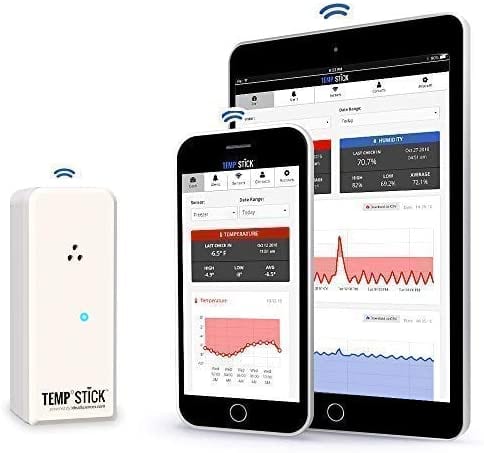
- Somewhere you will actually read it — or a remote sensor. This is the one room where wireless earns its price, because the failure mode of a basement hygrometer is nobody going down to look at it from October to May.
Min/max memory matters more here than anywhere else in the house. Basement humidity peaks on humid nights and during long absences, and a spot check at 6pm on a dry day will miss every one of them.
Basements vs Crawl Spaces
Crawl spaces have the same physics and worse access, which is why they are usually discovered late.
The EPA’s guidance for them is specific: “Put a plastic cover over dirt in crawlspaces to prevent moisture from coming in from the ground. Be sure crawlspaces are well-ventilated.” A bare earth floor is an open water source, and a ground cover is the single highest-value change most crawl spaces can get.
For monitoring, the difference is practical rather than technical. Nobody checks a display in a crawl space, so a remote or Bluetooth sensor is close to mandatory if the reading is going to be looked at more than once. Everything else — the target band, the summer ventilation trap, the condensation on cold surfaces — works exactly as it does in a basement. For the crawl space numbers in full, including what each reading means and how to size a dehumidifier to the footprint, see our guide to the ideal crawl space humidity.
Signs the Number Is Already Too High
A basement hygrometer usually confirms something you have half noticed. The tells, roughly in the order they appear:
| Sign | What it usually means |
|---|---|
| Musty smell that returns after cleaning | Microbial growth somewhere out of sight; the air is feeding it |
| Cardboard boxes going soft; paper curling | Sustained high RH rather than a one-off event |
| Sweating cold water pipes | Air dew point is above the pipe surface temperature |
| Damp patches on the slab on hot days | Condensation from warm humid air, not water rising through the floor |
| Rust on tool surfaces and appliance casings | Long-term RH well above 60% |
| Spotting on joists or the underside of the floor above | Advanced; the moisture load has been high for a long time |
The distinction that matters is condensation versus intrusion. Condensation appears on the coldest surfaces, spreads and retreats with the weather, and responds to a dehumidifier. Intrusion appears at a specific place — a crack, a joint, a window well — follows rain, and does not care what the dehumidifier is doing.
Bringing Basement Humidity Down
In rough order of how much they are worth:
- Stop liquid water first. Gutters, downspouts discharging away from the wall, and grading that slopes away from the house. No dehumidifier out-runs a wet foundation.
- Dehumidify rather than ventilate in warm weather. Set the humidistat to hold below 60%, and around 50% if the basement stores anything you care about. Give it a drain so it does not stop when the tank fills.
- Raise cold surface temperatures. The EPA’s framing is “to increase surface temperature, insulate or increase air circulation.” Insulating cold water pipes stops them sweating; moving air across a cold wall keeps its surface closer to room temperature.
- Cut the moisture sources. Dryers venting indoors, unvented bathrooms, uncovered sump pits and stored firewood all add measurable load.
- Cover bare earth. In a crawl space or a basement with an exposed dirt section, a plastic ground cover is the cheapest large improvement available.
Then keep watching. If the leak is fixed and the dehumidifier is sized correctly, the EPA’s drying rule applies to the aftermath too: “if wet or damp materials or areas are dried 24-48 hours after a leak or spill happens, in most cases mold will not grow.” The hygrometer is how you know the drying is actually happening.
Choosing a Basement Hygrometer
A basement asks for slightly different things than a living room. Digital, for response speed and a temperature reading you need in order to interpret the humidity at all — the reasoning is in our digital vs analog hygrometer comparison. Min/max memory, because the peaks happen when nobody is there. A remote or wireless sensor if the basement is somewhere you visit monthly rather than daily.
And calibration, before you trust any of it. A unit reading eight points low will report a comfortable 55% in a basement that is actually sitting at 63% and growing something. The salt test settles it overnight: see how to calibrate a hygrometer, and how accurate hygrometers really are for what the specification on the box is and is not telling you.
For the rest of the house, our guide to the ideal indoor humidity room by room covers where the basement number should sit relative to everywhere else, and how to measure humidity covers the measurement itself.
What is a good humidity level for a basement?
Below 60% relative humidity, ideally 30-50%. For an unfinished basement used for storage and mechanical equipment, holding 50-55% is a realistic target that keeps mold risk low without a dehumidifier running constantly. Above 60% the EPA notes condensation becomes likely.
Why is my basement humidity so much higher than upstairs?
Mostly temperature. Relative humidity is relative to temperature, and a basement is cooler than the rest of the house year-round because it is surrounded by soil. The same air that reads 45% in a 70F living room reads about 64% once it cools to 60F downstairs, without gaining any moisture at all.
Should I open basement windows to reduce humidity?
Only when the outdoor air is genuinely drier. In warm humid weather, opening basement windows adds moisture, because outdoor air brought into a cool basement rises in relative humidity and condenses on cold surfaces. In cold dry weather, ventilating does dry a basement out.
Where should a hygrometer go in a basement?
Around waist to chest height in the middle of the space, away from the dehumidifier’s airflow, the sump, the water heater and the laundry, and not pressed against a cold foundation wall. A second sensor in the dampest corner is worth more than moving the first one around.
What should I set a basement dehumidifier to?
A setting that holds the space below 60% RH, and around 50% if the basement stores documents, textiles, tools or anything else moisture-sensitive. Chasing a much lower number mainly costs electricity. Plumb it to a drain so it does not shut off when the tank fills.
Is 70% humidity too high for a basement?
Yes. It is well above the EPA’s 60% ceiling, and sustained readings at that level give mold, dust mites and rust the conditions they need. Treat 70% as a signal to find out whether the cause is seasonal condensation or actual water intrusion, because the fixes are different.
The Bottom Line
Put a basement hygrometer at chest height in the middle of the space, hold it below 60% RH and ideally nearer 50%, and dehumidify rather than ventilate whenever the outdoor air is warm and humid. Expect the basement to read ten to twenty points above the living room in summer for temperature reasons alone — that is normal, and it is also exactly why the basement needs a sensor of its own rather than an assumption borrowed from upstairs.
For the instrument behind these readings, see what a hygrometer is and how it works; for getting a trustworthy number out of a cold, damp space, see how to measure humidity.
References
- US Environmental Protection Agency. Mold Course Chapter 9: Prevention.
- US Environmental Protection Agency. Mold Course Chapter 2: Why and Where Mold Grows.
- US Environmental Protection Agency. What are the main ways to control moisture in your home?
- US Environmental Protection Agency. A Brief Guide to Mold, Moisture and Your Home.

5 thoughts on “Basement Hygrometer: Ideal Humidity and Sensor Placement”